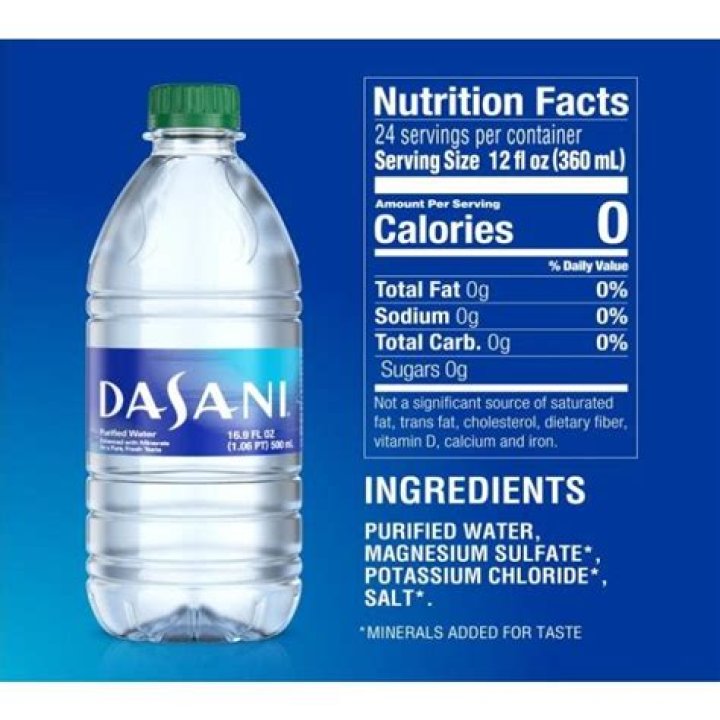
Since spring water emanates from underground water sources, it dissolves naturally occurring minerals and electrolytes like magnesium and calcium from the rock. As a result, spring water is generally considered hard.
Is bottled spring water hard or soft?
Bottled water is hard water as it contains lots of dissolved minerals.
Is bottled water considered hard water?
Calcium and magnesium levels combine to determine the mineral water’s “hardness”. Bottled water is naturally soft, thanks to low levels of calcium and magnesium. Higher levels are often found in municipal water, which is often “softened”—particularly in the United States—to be used at home.
Is bottled spring water just tap water?
Spring water generally has the same TDS range as tap water. In this sense, spring water is hardly different from tap water, since it is largely treated the same way. Once the water is at the bottling facility, it goes through a carbon filtration process to remove the chlorine.
Is bottled water harder than tap?
MEASUREMENTS AND MAIN RESULTS. Mineral levels varied among tap water sources in North America and among bottled waters. European bottled waters generally contained higher mineral levels than North American tap water sources and North American bottled waters.
What is the example of hard water?
It is a chemical substance which is transparent, colourless, odourless and tasteless. Water is categorised into two types. They are hard water and soft water.Soft water: Difference between Hard water and Soft water Example: Groundwater like deep wells Example: Rainwater Hair and skin become dry Hair and skin become soft.
What is considered hard water?
General guidelines for classification of waters are: 0 to 60 mg/L (milligrams per liter) as calcium carbonate is classified as soft; 61 to 120 mg/L as moderately hard; 121 to 180 mg/L as hard; and more than 180 mg/L as very hard. Water hardness varies throughout the United States.
Is spring water soft?
Since spring water emanates from underground water sources, it dissolves naturally occurring minerals and electrolytes like magnesium and calcium from the rock. As a result, spring water is generally considered hard.
How do you soften hard water?
The most effective way to address hard water is with a water softener. Water is softened when calcium and magnesium—the hardness ions—are collected by tiny resin beads through a process called ion exchange. The resin beads are charged with sodium or potassium ions.
What is soft water examples?
Soft water: Soft water is surface water that contains very low concentration of ions or minerals, e.g., Rainwater and distilled water.
Is spring water really from a spring?
According to the Food and Drug Administration, spring water must come from an underground source and flow naturally to the earth’s surface. But spring water doesn’t have to be literally collected at the spring — it can also be pumped out from a hole in the ground.
Is spring water OK to drink?
The bottom line is that both purified water and spring water are considered safe to drink (and in-fact, well within the confines of “safe” drinking water) according to the EPA. Depending on the quality of your local tap water, both spring and purified waters are likely purer than water from the faucet.
What’s the difference between purified water and spring water?
Spring water is naturally filtered underground. It’s collected from springs or boreholes. Meanwhile, purified water is any type of water that has undergone a controlled filtration and purification process to remove impurities and contaminants.
What is spring water good for?
Spring water provides much needed oxygen to the body and the brain, aids in good digestion, helps us maintain a healthy weight, and tastes great. Spring water never tastes flat or boiled. It makes for an excellent drinking experience and one that does wonders for the body. Mineral water is right behind.
Is it good to drink spring water everyday?
The mineral content in spring water varies, but studies show that its higher mineral content can help us meet the recommended daily intake (RDI) of certain nutrients like magnesium, potassium, calcium and sodium, particularly in cases where nutrient requirements are not being met with a healthy diet.
Is bottled water bad for you?
The Food and Drug Administration (FDA) set the standards for bottled water. They require manufacturers to process and transport bottled water under sanitary conditions and to use processes that ensure the safety of the water. This means that, in general, bottled water is safe to drink.
How do I know if my water is hard or soft?
The hardness or softness of water is determined by the mineral content of both calcium and magnesium: Soft water has less than 17 parts per million. Slightly hard water has 17 to 60 parts per million. Moderately hard water has 60 to 120 parts per million. Hard water has 120 to 180 parts per million.
Which water is best for drinking hard or soft?
Since hard water contains essential minerals, it is sometimes the preferred drinking water. Not only because of the health benefits, but also the flavor. On the other hand, soft water tastes salty and is sometimes not suitable for drinking.
What is the temporary hardness of water?
Temporary hardness is a type of water hardness caused by the presence of dissolved bicarbonate minerals (calcium bicarbonate and magnesium bicarbonate). The presence of the metal cations makes the water hard.
What is the ideal hardness of water?
The membrane manufacturers will often specify what the maximum hardness concentration can be, but industry rule of thumb is that hardness should not exceed 120 to 170 mg/L (7 to 10 grains per gallon).
What is the ideal hardness of drinking water?
Acceptable Results: Total hardness is a test for overall water quality; there are no health concerns related to total hardness. Values near 150 mg/L are generally ideal from an aesthetic viewpoint. Water less than 150 mg/L are considered soft water while values greater than 200 mg/L are considered hard water.
How do you measure how hard your water is?
Water hardness can be easily measured using a simple soap test kit that will measure in “grains of hardness” (a little bottle with a line marked on it which you fill to the line with water, add a drop of soap, and shake to look for suds. More drops of soap – more degrees of hardness).